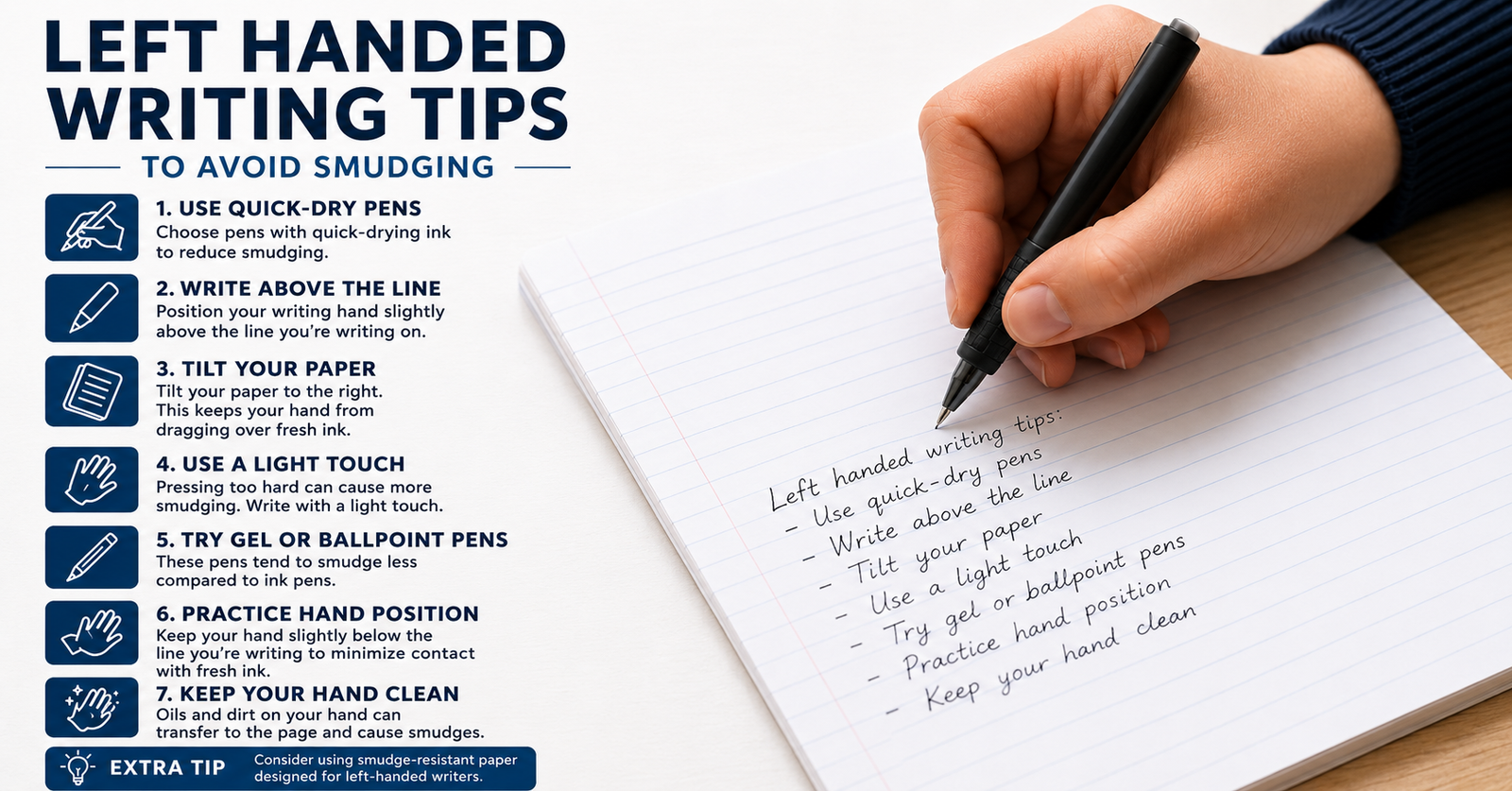
If you are left-handed, you know the struggle all too well. You finish writing a beautiful page, only to look down and realize the side of your left hand is coated in a dark, silvery sheen of graphite or a messy streak of blue ink. Worse, your pristine page now looks like a blurred, unreadable mess.
In a world designed for the right-handed majority, lefties face a unique physical challenge. Because we write from left to right, our writing hand naturally follows the pen, dragging directly over the fresh, wet ink we just laid down.
The good news? This is not a talent issue; it is a physics issue. By adjusting your angles, your grip, and your tools, you can completely eliminate the “silver hand” syndrome.
The Root Cause: Push vs. Pull Mechanics
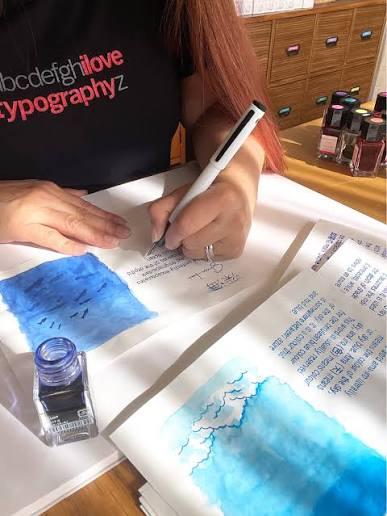
Before we look at the solutions, it helps to understand why this happens. When a right-handed person writes, they pull the pen across the page. The pen glides smoothly, and their hand stays to the left of the fresh ink, never touching it.
When a left-handed person writes, they push the pen across the page. This pushing action creates more friction against the paper fibers, forcing the ink to pool slightly. As your hand moves left-to-right to complete the line, your palm and pinky finger act like a squeegee, smearing that wet ink across the sheet.
To solve this, we must change how your hand travels across the page.
3 Game-Changing Left-Handed Writing Tips to Avoid Smudging
You do not have to settle for messy notes. These three structural adjustments work together to keep your hand away from wet ink entirely.
Also Read: Short Movie Storytelling Techniques How to Tell a Big Story in Small Minutes
1. Ditch the “Hook” and Learn to Underwrite
Many lefties naturally adopt a “hook grip” (overwriting), where they curl their wrist and hand above the line of text. This is usually a self-taught childhood habit to see what is being written. Unfortunately, hooking your wrist places your hand directly in line with the wet ink, causing constant smudges and putting painful strain on your wrist joints.
The ultimate fix is underwriting.
- Keep your wrist straight and relaxed.
- Position your hand completely below the baseline of your writing.
- Hold your pen slightly further back from the tip (about 1 to 1.5 inches). This gives you a better view of your words and keeps your fingers out of the fresh ink pool.
2. The 30 to 45-Degree Paper Rotation Patch
If you try to underwrite on a perfectly straight piece of paper, your wrist will feel tense. The secret to making underwriting comfortable is rotating your paper.
Do not keep your notebook square with the desk. Instead:
- Rotate your paper 30 to 45 degrees clockwise.
- The top-left corner of the page should point roughly straight ahead, while the bottom-right corner points toward your midsection.
- Move the entire notebook slightly to the left side of your body.
This simple rotation aligns the page with the natural angle of your left arm’s movement, allowing you to write across the line while your hand glides safely beneath it.
   [ Traditional Straight Paper ]         [ Leftie Rotated Paper ]
         +--------------+                      +--------------+
         |              |                      |  /  /  /  /  | <--- Angled Lines
         |  Hand drags  |                      | /  /  /  /   |
         |  over text   |                      |              |
         +--------------+                      +--------------+
           Wrist Hooked                          Rotated 45° Clockwise
                                                 Hand Glides Below Text
3. Upgrade to Fast-Drying Writing Tools
Sometimes, a quick-drying ink is the easiest win. If you are using standard, slow-drying gel pens or heavy-flowing fountain pens, you are fighting an uphill battle.
| Pen Type | Smudge Risk | Recommended Fast-Drying Leftie Picks |
| Standard Gel Pens | High | Pentel EnerGel (0.5mm or 0.7mm) — famous for drying instantly. |
| Ballpoint Pens | Low | Uni-ball Jetstream — hybrid low-viscosity ink that writes smoothly but dries on contact. |
| Fountain Pens | Very High | Lamy Safari (with Left-Handed “LH” nib) paired with Noodler’s Bernanke Black quick-dry ink. |
Easy Everyday Hacks for Immediate Smudge Relief
If you are in a classroom or a meeting and cannot easily practice your grip or run out to buy new pens, try these quick, practical workarounds:
- The “Barrier Paper” Trick: Place a clean, folded index card or a piece of scrap paper directly under your writing hand. As you write, your hand will rest and slide on the scrap paper, absorbing any excess ink before it can smear across your page.
- The Smudge Guard Glove: Popularized by digital artists and tablet users, a lightweight, two-finger Lycra glove covers your pinky and ring finger. It allows your hand to slide effortlessly across paper or whiteboards without picking up graphite or ink.
- Avoid Heavily Coated Paper: Highly smooth, glossy, or heavily coated notebook paper (like some premium 120gsm journals) keeps ink wet on the surface longer. Opt for slightly more absorbent, toothier, matte-finish paper that pulls the ink down into the fibers quickly.
Master the Smudge-Free Slide
Overcoming the left-handed smudge is all about working with your natural biomechanics instead of fighting them. By rotating your notebook clockwise, practicing an underwriting posture, and loading your pencil case with fast-drying inks, you will finally enjoy clean, crisp, smudge-free pages.
Give yourself a few weeks to adjust to these physical tweaks. Before long, writing clean, beautifully aligned notes will feel like second nature.
FAQs
Why does my left-handed writing look messy?
Left-handed writing often looks messy because your hand naturally pushes the pen across the page, causing the nib to dig into the paper fibers. Additionally, dragging your hand over fresh ink or graphite causes smudging, which blurs your letters.
What is the best pen for a left-hander?
The absolute best pen for a left-handed writer is the Uni-ball Jetstream. It uses a specialized hybrid ink that combines the smoothness of a gel pen with the incredibly fast drying time of a traditional ballpoint pen. Another fantastic option is the Pentel EnerGel.
Is dotted or lined paper better for lefties?
Both work well, but dotted paper often provides a slight advantage. It gives you the structural guidelines you need to write straight while keeping the page visually open, which helps you align your hand comfortably without feeling boxed in.
How do left-handed people write on whiteboards without smudging?
To write on a whiteboard without smudging, stand slightly to the right of your writing space so your body is facing the board. Write from right to left if possible, or consciously lift your hand and wrist slightly off the board’s surface, using your shoulder and elbow to guide your strokes rather than resting your palm.
For more updates visit: STORY VISTA