Ever binge-watched a show at 2 a.m. and thought, “just one more episode,” even though you had work in five hours? That’s not an accident. That’s story structure doing its job so well you didn’t even notice it was there.
Whether it’s your favorite Marvel movie, a celebrity memoir, a viral TikTok skit, or the novel sitting on your nightstand, almost every story you’ve ever loved follows some version of the same underlying skeleton. Writers call it story structure, and once you learn to spot it, you genuinely can’t unsee it.
In this guide, we’re breaking down what story structure actually means, the most popular structures writers use, and how you can use them — even if you’re not a novelist, but just someone trying to write a better Instagram caption, YouTube script, or that novel you keep saying you’ll finish “someday.”
What Is Story Structure?
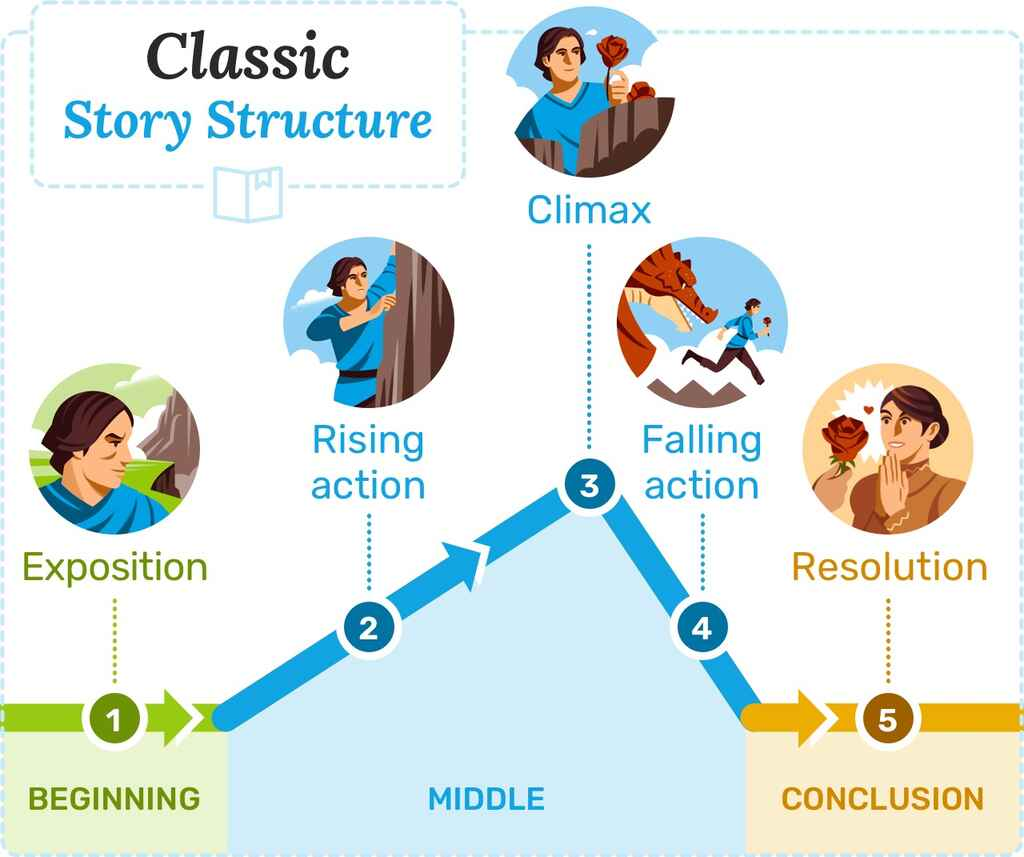
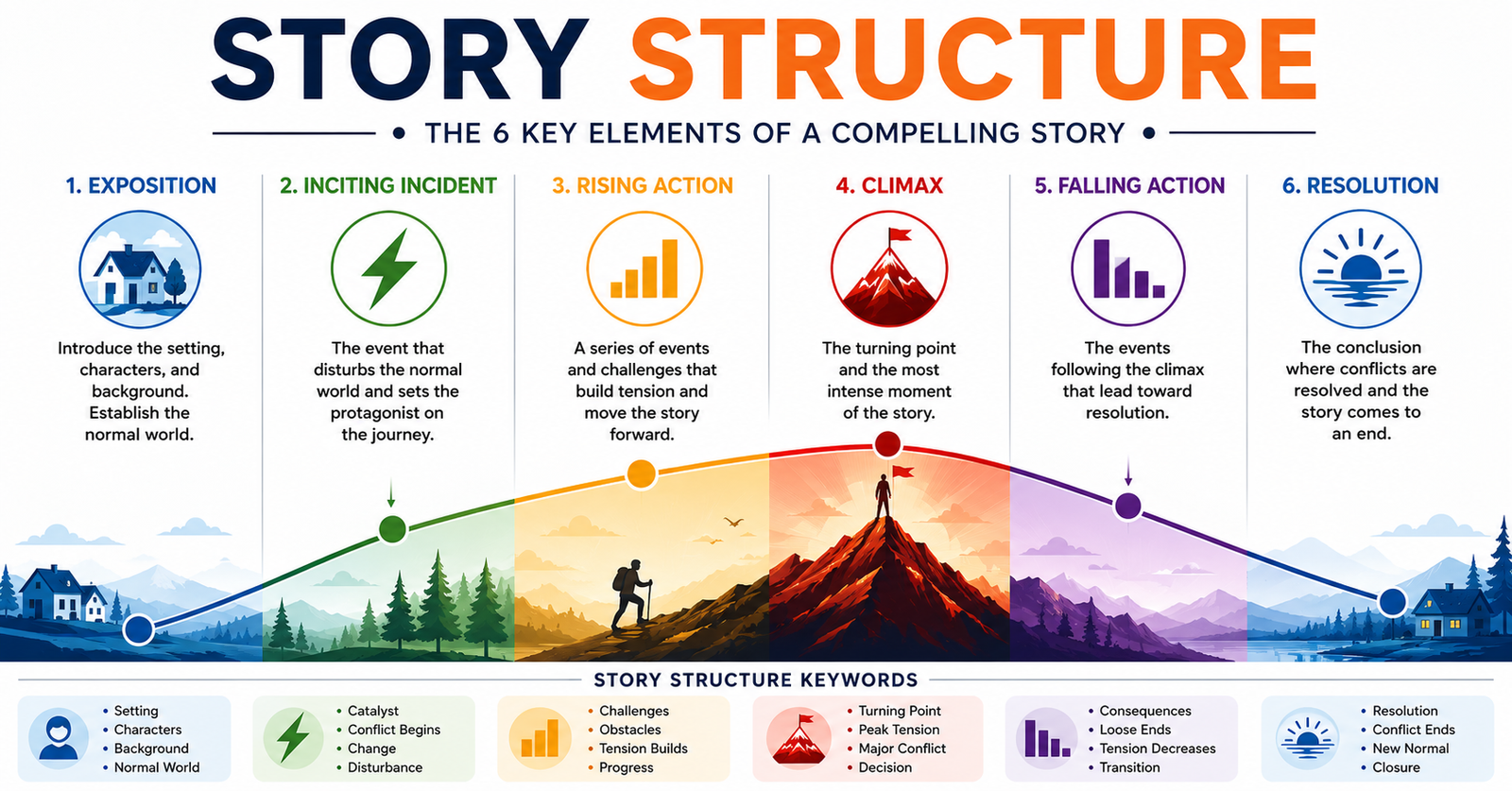
Story structure is the framework that organizes a story’s events into a shape an audience can follow and feel. It’s the order in which things happen — setup, conflict, turning points, climax, resolution — arranged so the story builds tension, keeps readers curious, and pays off in a satisfying way.
Think of it like the frame of a house. You don’t see the frame once the walls and paint go up, but without it, the whole thing collapses. Story structure works the same way. Readers rarely notice a well-built structure consciously; they just feel like they “couldn’t put the book down.” They notice a broken one immediately, even if they can’t explain why a story felt flat, rushed, or confusing.
At its core, good story structure answers three questions for the audience, usually without them realizing it’s being asked:
- Who do I care about, and what do they want?
- What’s standing in their way?
- What happens if they don’t get it?
Every structure below is really just a different way of organizing answers to those three questions.
Also Read: 10 Storytelling Techniques That Actually Hook Readers
Why Story Structure Actually Matters
A lot of new writers assume structure is a rigid rulebook that kills creativity. It’s the opposite. Structure is what makes creativity land. You can have the most original idea in the world, but if it’s told in a shapeless, meandering way, readers will drift off before they get to the good part.
Here’s what solid structure does for a story:
- Keeps readers hooked. It creates momentum, so there’s always a reason to keep reading or watching.
- Makes emotional payoffs hit harder. A twist or a happy ending only feels earned if the structure built up to it properly.
- Helps writers avoid the “muddy middle.” Most abandoned stories die in the middle, where structure gives you a map instead of a blank page.
- Makes editing faster. When something feels “off” in a draft, it’s usually a structural problem, not a sentence-level one.
The Most Popular Story Structures (And When to Use Each One)
There isn’t just one “correct” structure. Different genres, formats, and goals call for different shapes. Here are the ones that show up most often, in books, movies, and even short-form content.
1. The Three-Act Structure
This is the most well-known structure in Western storytelling, and it’s the backbone of most Hollywood movies.
- Act One (Setup): Introduce the main character, their world, and the problem or desire that kicks off the story.
- Act Two (Confrontation): The character pursues their goal, faces escalating obstacles, and usually hits a low point near the end of this act.
- Act Three (Resolution): The climax happens, the main conflict is resolved, and loose ends are tied up.
It’s popular because it mirrors how humans naturally process a problem: something starts, it gets complicated, it gets solved. It’s a great starting point if you’re new to writing and don’t want to overthink structure.
2. The Hero’s Journey
Popularized by Joseph Campbell and later adapted by screenwriter Christopher Vogler, the Hero’s Journey is the three-act structure’s more detailed cousin. It’s the structure behind stories like Star Wars, The Lion King, and countless fantasy and adventure films.
It typically includes stages like:
- The Ordinary World
- The Call to Adventure
- Refusal of the Call
- Meeting the Mentor
- Crossing the Threshold
- Trials and Allies
- The Ordeal
- The Reward
- The Road Back
- Resurrection
- Return with the Elixir
You don’t have to hit every beat exactly, and most modern stories don’t. But this structure is especially useful for character-driven, transformation-heavy stories where the hero has to change internally to win externally.
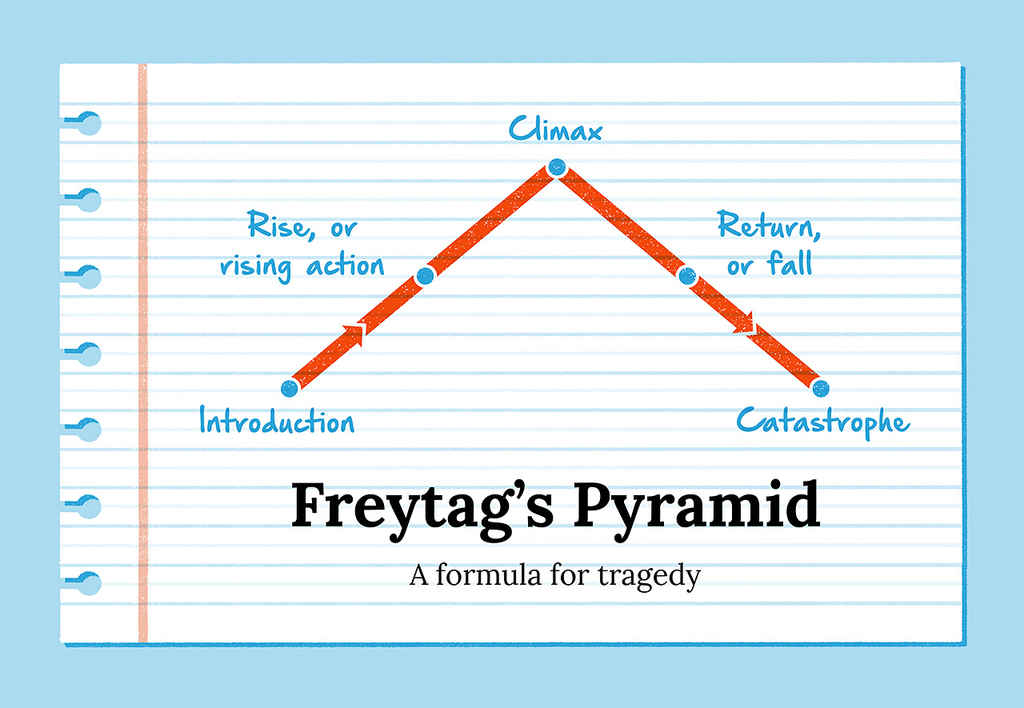
3. Freytag’s Pyramid
This is an older, more academic structure, often taught in literature classes, shaped like a pyramid:
Exposition → Rising Action → Climax → Falling Action → Resolution
It’s especially common in classic literature and tragedies, where the story climbs steadily toward a peak and then unwinds. If you’re writing something with a slower burn and a more dramatic downfall, this shape often fits better than a fast-paced three-act structure.
4. Save the Cat Beat Sheet
Created by screenwriter Blake Snyder, this is a beat-by-beat structure popular with screenwriters and increasingly with novelists, because it’s extremely specific. It breaks a story into 15 precise beats, including things like the “Catalyst,” the “Midpoint,” and the “Dark Night of the Soul.”
Writers love it because it removes guesswork. If you like a paint-by-numbers approach while you’re learning, this is one of the most beginner-friendly structures out there.
5. Kishotenketsu
This is a four-act structure from East Asian storytelling traditions (used widely in Japanese and Chinese narratives) that doesn’t rely on conflict as the main engine of the plot:
Introduction (Ki) → Development (Shō) → Twist (Ten) → Conclusion (Ketsu)
What makes this structure interesting is that it doesn’t require a villain or a clear antagonist. The “twist” section introduces a new perspective or unexpected element that recontextualizes everything before it. It’s a great option for slice-of-life stories, some anime, and short-form content that isn’t built around a traditional conflict.
Story Structure Comparison Table
| Structure | Best For | Key Feature |
|---|---|---|
| Three-Act Structure | Beginners, general fiction, films | Simple setup–confrontation–resolution flow |
| Hero’s Journey | Fantasy, adventure, character transformation stories | Deep internal + external character arc |
| Freytag’s Pyramid | Classic literature, tragedies, slow-burn drama | Peaks at the climax, then unwinds |
| Save the Cat | Screenwriters, plot-driven commercial fiction | Precise, beat-by-beat roadmap |
| Kishotenketsu | Slice-of-life, short stories, non-conflict narratives | Twist replaces traditional conflict |
How to Choose the Right Story Structure for Your Story
There’s no universal “best” structure — it depends on what you’re writing and who you’re writing it for. Here’s a quick, practical way to decide:
- Writing your first story? Start with the three-act structure. It’s flexible and forgiving.
- Writing a character who needs to grow or transform? Try the Hero’s Journey.
- Writing something literary, tragic, or slow-building? Freytag’s Pyramid will likely feel more natural.
- Need a detailed, almost scene-by-scene roadmap? Save the Cat is built exactly for that.
- Writing something quieter, reflective, or without a clear villain? Kishotenketsu can work beautifully.
A lot of professional writers also mix structures — using the three-act structure as the big-picture skeleton, while borrowing specific beats from Save the Cat or moments from the Hero’s Journey. Structure is a tool, not a cage.
Common Story Structure Mistakes to Avoid
- Starting too early. Don’t spend three chapters on backstory before the actual story begins.
- A saggy middle. If your Act Two feels endless, it usually needs more obstacles or higher stakes, not more scenes.
- Rushed endings. If your climax feels sudden, your structure probably skipped the necessary buildup.
- No clear turning points. Every good structure needs moments where the story shifts direction — without them, the plot feels flat.
- Copying a structure too rigidly. Structure should serve the story, not the other way around.
Final Thoughts
Story structure isn’t some rigid formula that boxes in creativity — it’s the scaffolding that lets your best ideas actually reach readers the way you intended. Once you understand the shape a story is supposed to take, you’ll start noticing it everywhere: in the movies you rewatch, the books you can’t put down, even the celebrity interviews and viral videos that somehow keep you scrolling. The good news is you don’t need to memorize every structure perfectly. Pick one that fits what you’re writing, use it as a guide rather than a rulebook, and let your own voice fill in the rest.
Also Read: The Left-Handed Writer’s Survival Guide How to Stop the Smudge for Good
FAQs
What is the simplest story structure for beginners?
The three-act structure (setup, confrontation, resolution) is generally considered the easiest to learn and apply, especially for first-time writers.
Is the Hero’s Journey the same as the three-act structure?
No, but they’re related. The Hero’s Journey is essentially a more detailed, character-focused expansion of the three-act structure, with specific stages for the hero’s internal and external transformation.
Do all stories need a villain to work?
Structures like Kishotenketsu show that a story can work through a “twist” or shift in perspective instead of a traditional antagonist.
Can I combine different story structures?
Yes, and many professional writers do exactly this. It’s common to use one structure as the overall framework and borrow specific beats or techniques from another.
How long should each act be in a three-act structure?
A common guideline is roughly 25% for Act One, 50% for Act Two, and 25% for Act Three, though this varies by genre, format, and writer.
Does story structure apply to short-form content, like YouTube videos or Reels?
Even a 60-second video benefits from a mini version of structure — a hook, rising tension or curiosity, and a payoff — which is part of why some short-form creators borrow beats from screenwriting frameworks like Save the Cat.
For more updates visit: STORY VISTA





One Comment