Let’s skip the economics lecture and get straight to it: if you need to know the naira to USD rate right now, you’re probably about to send money home, plan a trip, pay a foreign invoice, or just figure out why your purchasing power feels different from last year.
Here’s the honest answer and the fuller picture behind the number.
What Is the Naira to USD Rate Today?

As of late July 2026, the Nigerian naira exchanges at approximately ₦1,380 per US dollar on the official Nigerian Foreign Exchange Market (NFEM). On the parallel market — the informal network of street dealers and bureau de change operators — the rate is running slightly higher, at around ₦1,416 per dollar.
That gap of roughly ₦36 between official and informal markets is actually a sign of relative stability. Not long ago, the spread was far wider.
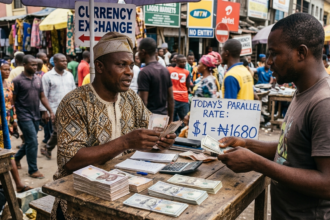
The Central Bank of Nigeria publishes the NFEM rate as a volume-weighted average of completed transactions in the official market. That is the benchmark used for government transactions, banks, and most formal financial activity. The parallel market rate reflects supply and demand among informal dealers — it’s where many individuals and smaller businesses end up buying dollars when the official window is inaccessible or slow.
Quick conversion guide (approximate, July 2026):
USD NGN (Official ~₦1,380) NGN (Parallel ~₦1,416) $1 ₦1,380 ₦1,416 $10 ₦13,800 ₦14,160 $50 ₦69,000 ₦70,800 $100 ₦138,000 ₦141,600 $500 ₦690,000 ₦708,000 $1,000 ₦1,380,000 ₦1,416,000
Rates fluctuate daily. Always confirm with your bank, fintech app, or licensed dealer before transacting.
Why Has the Naira Been So Volatile?
If you’ve been paying attention to Nigerian currency news over the past three years, the naira’s journey has been genuinely dramatic — and understanding it matters whether you’re a Nigerian living abroad, a business paying in dollars, or a traveller trying to budget.
The 2023 Turning Point
The naira’s modern story starts in June 2023. For years before that, Nigeria operated multiple official exchange rate windows — a system that kept the official rate artificially low while a bustling parallel market quoted far higher numbers. Importers, multinationals, and ordinary citizens navigated the gap with varying degrees of frustration.
Read More: Naira to Dollar Black Market Rate What You Need to Know
When President Bola Tinubu took office in May 2023, his administration moved quickly. The Central Bank of Nigeria unified all exchange rate windows under the NFEM system, letting the naira float freely for the first time. Almost overnight, the official rate jumped from around ₦460 to over ₦760 to the dollar — a fall of more than 40% in a single day for those transacting at official rates.
It was painful. But it was also, in the view of many economists, long overdue. The IMF, World Bank, and numerous analysts had long argued that the artificially controlled rate was distorting Nigeria’s economy more than a freely determined one would.
2024: The Deeper Slide
The reforms continued, but the naira kept falling. By January 2024, the official rate touched ₦1,482 per dollar — a new record low at the time. By the end of 2024, it had settled at approximately ₦1,535 at the official rate, representing a 41% depreciation across the calendar year.
On the parallel market, things were sharper still: the dollar was fetching around ₦1,660 at year-end 2024. In November 2024, the USD/NGN rate hit an all-time high of ₦1,717.50 — the weakest the naira has ever been.
2025–2026: Stabilisation (Cautious)
The recovery since that low point has been modest but real. By mid-2025, the CBN’s tighter monetary policy — Nigeria’s benchmark interest rate currently sits at 26.50%, one of the highest in the world — began to slow the bleeding. Improved oil revenues and better forex liquidity helped too.
Through 2026, the naira has been trading in a ₦1,350–₦1,430 range at the official rate, with the parallel market premium staying relatively contained. That narrowing gap is the clearest indicator that the reforms, painful as they were, have begun to take effect.
What Drives the Naira-Dollar Rate?
The naira to USD rate doesn’t move randomly. Several factors push it up and down, and knowing them helps you anticipate when rates might shift.
Oil prices and production. Nigeria is Africa’s largest oil producer, and oil export revenues are the country’s primary source of foreign currency. When global oil prices fall, fewer dollars flow into Nigeria — and the naira weakens. Conversely, stronger output or higher prices tend to support the naira.
CBN interventions. The Central Bank can inject dollars into the official market to ease demand and support the naira. These interventions are a regular feature of the market, and the volume and timing of CBN activity directly influences the official rate.
Inflation differential. Nigeria’s inflation rate is running at around 15%, while the US rate is approximately 2.4%. When inflation is structurally higher in one country, its currency tends to depreciate against the other over time. This basic relationship explains a lot of the naira’s long-run decline.
Remittances. Nigeria receives billions of dollars in diaspora remittances each year — money sent home by Nigerians living abroad. Policies that make it easier or harder to send remittances through official channels affect how much dollar supply enters the formal market.
Import demand. Nigeria imports a significant portion of its food, fuel, and manufactured goods. The constant need to pay for these imports in dollars puts steady upward pressure on demand for foreign currency.
Official Rate vs. Parallel Market: Which Should You Use?
This is the practical question most people actually want answered.
Use the official rate when transacting through a licensed Nigerian bank, a major international fintech (like Wise or Remitly), or a registered bureau de change. You’ll get a rate close to the NFEM figure, the transaction will be documented, and your money is protected.
The parallel market — the informal network of street dealers and unlicensed exchangers — often offers slightly better naira rates for those converting dollars. However, there are real risks: counterfeit notes, short-changing, regulatory exposure, and no recourse if something goes wrong. In Nigeria, operating outside authorised forex channels can also attract scrutiny from financial regulators.
For most purposes — sending money home, paying for international tuition or subscriptions, funding travel — a licensed fintech or bank transfer is the safer and often more cost-effective choice once fees are factored in.
Best tools for checking live rates:
- Wise (wise.com) — shows the real mid-market rate with transparent fees
- CBN NFEM website — official daily benchmark
- Vanguard Nigeria / Channels TV — reliable daily rate reporting
- Google “NGN to USD” — quick reference, though it uses mid-market, not the exact buying/selling spread
What This Rate Means If You’re Travelling, Sending Money, or Running a Business
For Nigerian travellers going abroad
At ₦1,380 to the dollar, international travel remains expensive in naira terms. A $1,000 hotel booking costs the equivalent of ₦1.38 million at the official rate. Budget carefully, and consider whether your bank’s travel card offers better rates than exchanging cash.
For the diaspora sending money home
Remittance platforms have become sharply competitive. Services like Wise, Remitly, and Grey typically offer rates closer to the mid-market figure than traditional bank transfers, with lower fees. Even a ₦20 difference per dollar matters when sending significant sums.
For businesses paying international invoices
Dollar-denominated contracts, SaaS subscriptions, software licenses, and supplier invoices all cost more naira than they did two years ago. If your business hasn’t repriced for the new FX reality, that’s a conversation worth having sooner rather than later.
A Note on Apps and Rate Converters
If you search “naira to USD” on Google, you’ll get a quick converter showing the mid-market rate. That’s a useful reference point, but it is not the rate you’ll actually transact at. Every exchange involves a spread — the difference between the buying and selling rate — plus fees, which vary by provider.
When comparing services, always look at the total cost of the transaction, not just the headline rate. A provider advertising a “great rate” may charge a flat fee that makes the total more expensive than a competitor with a slightly lower rate and no fee.
The Bottom Line
The naira to USD story in 2026 is one of hard-won partial stability after a genuinely turbulent few years. The rate of around ₦1,380 at the official market represents a currency that has been through dramatic reform — painful, necessary, and still unfinished.
For everyday Nigerians, the practical takeaway is straightforward: use authorised channels, compare total transaction costs (not just headline rates), and keep an eye on the CBN and NFEM updates for any policy shifts that might move the market.
Currency markets don’t move in straight lines. But understanding why the naira is where it is — and what could push it in either direction — puts you in a better position than just refreshing a rate widget and hoping for the best
FAQs
What is the naira to USD rate today?
As of late July 2026, the official NFEM rate is approximately ₦1,380 per dollar, while the parallel market rate is around ₦1,416. Rates change daily — check your bank, Wise, or a Nigerian financial news outlet for the latest figure before transacting.
Why is the naira so weak against the dollar?
A combination of structural factors: high import dependence, oil revenue volatility, inflation running well above US levels, and years of managed exchange rate policy that suppressed the official rate. The 2023 CBN reforms allowed the naira to find a more market-determined level, which meant a sharp initial fall.
Is the black market rate legal in Nigeria?
Transacting through unregistered dealers is not legally sanctioned and carries financial and regulatory risk. The CBN has consistently advised the public to use authorised channels — licensed banks, fintech platforms, and registered bureau de change operators.
Will the naira get stronger in 2026?
Analysts offer cautious optimism. The naira has stabilised significantly from its 2024 lows, and Nigeria’s foreign reserves have improved. Some forecasts suggest the rate could improve modestly toward ₦1,300 range over the coming 12 months if oil revenues remain strong and monetary policy stays tight — though currency forecasting is inherently uncertain.
What is the best way to send USD to Nigeria?
Regulated fintech services like Wise, Remitly, and Grey consistently offer competitive rates with transparent fees and fast transfers. For larger sums, a direct bank-to-bank SWIFT transfer may be appropriate, though fees and processing times vary.
How much is ₦100,000 in US dollars?
At the current official rate of approximately ₦1,380 per dollar, ₦100,000 is worth roughly $72.46. At the parallel market rate of ₦1,416, it’s approximately $70.62. Use a live converter for precision before transacting.
For more updates visit: STORY VISTA