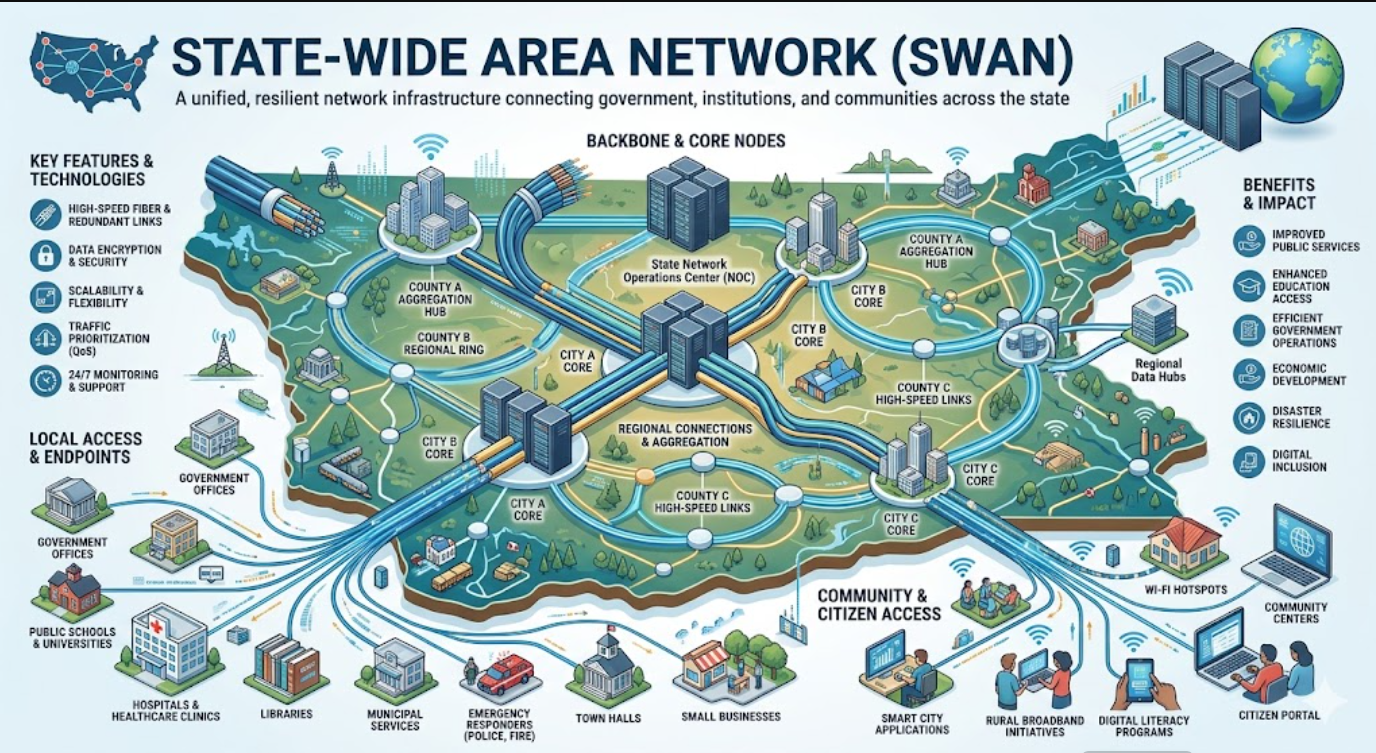
A state wide area network plays an important role in connecting cities, government offices, schools, healthcare centers, and businesses across a large geographic region. As communication needs continue to grow, organizations require fast, secure, and reliable networking solutions that can link multiple locations efficiently. This is where a state wide area network becomes highly valuable.
Unlike a local network that only works within one building, a state wide area network extends across an entire state or province. It allows data, voice communication, cloud applications, and digital services to move smoothly between distant locations. Governments often rely on this type of network to improve public services, while enterprises use it to connect branches and remote teams.
In today’s digital world, speed and accessibility matter more than ever. Whether supporting online education, telemedicine, banking, or administration, a state wide area network helps maintain stable communication infrastructure. This guide explains how it works, where it is used, and why it remains essential for modern organizations.
What Is a State Wide Area Network
A state wide area network is a communication network that connects multiple local area networks across a large region within a state. It uses private lines, fiber optics, wireless systems, and internet technologies to transfer data between locations.
For example, if a government department has offices in several cities, each office may have its own internal network. A state wide area network links all those offices into one connected system. Staff can share files, access central databases, hold video meetings, and manage operations from different places.
This type of network is designed for broad coverage, strong security, and dependable performance. It supports communication across long distances while maintaining consistent service levels.
How a State Wide Area Network Works
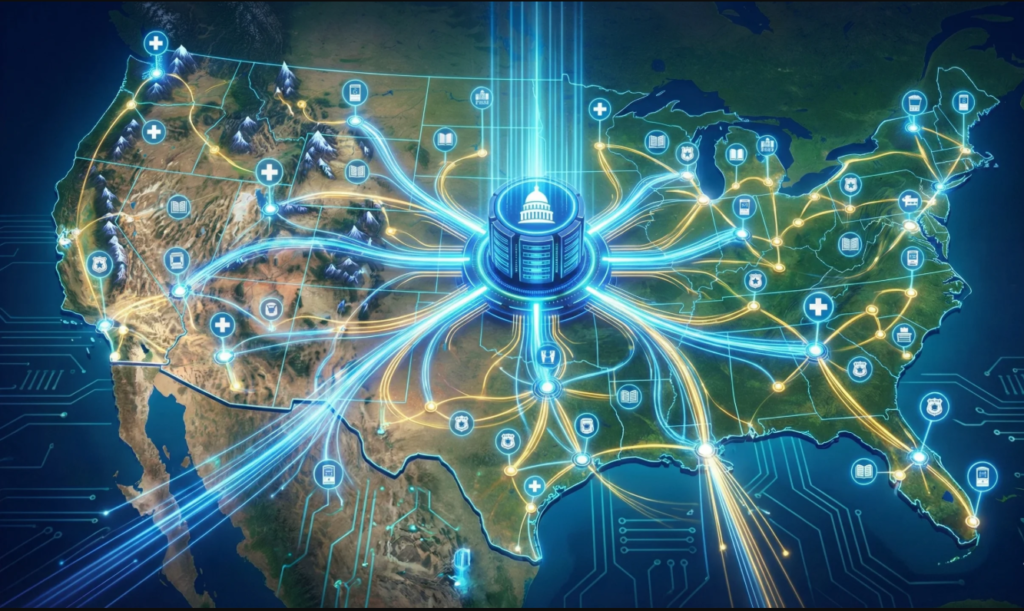
A state wide area network works by connecting smaller networks through high-capacity communication channels. These channels may include fiber optic cables, leased lines, broadband internet, microwave links, or satellite systems.
Also Read: Best Text-to-Video, AI Video Generator & Lip Sync Tools (2026)
Each office or site connects to a router or gateway device. That device sends and receives traffic to the central network infrastructure. Data travels securely between endpoints through routing protocols and encryption systems.
Modern networks often use software-defined technologies to improve efficiency. This allows administrators to manage traffic, prioritize applications, and monitor performance in real time. For example, video conferencing traffic can receive higher priority than non-urgent downloads.
The main goal is to make all connected sites function as if they are part of one larger network.
Difference Between LAN, MAN, WAN, and State Wide Area Network
A local area network usually covers a small location such as an office, home, or school building. It is fast and limited to a short range.
A metropolitan area network covers a city or urban region. It links multiple buildings within one metropolitan zone.
A wide area network spans large distances, often nationally or internationally.
A state wide area network focuses specifically on statewide coverage. It is larger than city networks but more regionally focused than global wide area systems. This makes it ideal for state departments, universities, utility providers, and businesses operating across one state.
Why a State Wide Area Network Is Important
Digital transformation depends on strong connectivity. A state wide area network supports communication between offices that need to work together every day. Without it, organizations may face delays, data silos, and operational inefficiencies.
Public sector agencies use statewide networks to deliver citizen services faster. Educational institutions depend on them for remote learning platforms and shared resources. Healthcare providers need them for patient records, diagnostics, and telehealth consultations.
Reliable connectivity also improves emergency response systems. During natural disasters or urgent incidents, agencies need instant coordination. A state wide area network can help maintain communication when it matters most.
Key Benefits of a State Wide Area Network
One major advantage of a state wide area network is centralized communication. Teams in different cities can access the same applications and databases without duplication.
Another benefit is cost efficiency over time. Instead of maintaining isolated systems in each location, organizations can streamline operations through one connected infrastructure.
Scalability is another strength. As new offices open or service centers expand, additional locations can be added to the network.
Security also improves when managed properly. Centralized monitoring, access control, and encrypted traffic help protect sensitive information.
Performance consistency matters as well. With proper bandwidth management, users across the state can enjoy reliable access to critical tools.
Common Uses of a State Wide Area Network
Government departments often depend on a state wide area network for taxation systems, identity services, licensing, and internal administration. Shared systems reduce delays and improve public service delivery.
Universities and colleges use statewide networks to connect campuses, libraries, research labs, and digital learning platforms.
Hospitals and clinics use them for electronic medical records, imaging transfers, appointment systems, and secure consultations.
Retail chains and banks connect branches through regional networks for transactions, reporting, and customer support.
Utility providers use statewide communication systems to manage field teams, service requests, and monitoring infrastructure.
Technologies Used in a State Wide Area Network
Fiber optic connectivity is common because it offers high speed and low latency. It is ideal for carrying large amounts of data between cities.
Multiprotocol label switching has been widely used for secure and stable enterprise traffic routing.
Virtual private networks allow secure communication over public internet infrastructure. This can lower costs while maintaining privacy.
Wireless backhaul systems are useful in remote areas where fiber is difficult to deploy.
Cloud networking tools now play a growing role. Many organizations connect offices directly to cloud platforms instead of routing everything through one data center.
These technologies often work together in a hybrid model to support a strong state wide area network.
Security in a State Wide Area Network
Security is a top priority because large networks handle sensitive information. A state wide area network should include encryption for data in transit. This protects communications from interception.
Firewalls help filter malicious traffic. Intrusion detection systems identify suspicious behavior. Multi-factor authentication reduces unauthorized access risks.
Regular software updates are necessary to patch vulnerabilities. Network segmentation also improves safety by separating critical systems from general traffic.
Staff awareness is equally important. Human error remains one of the biggest security risks, so training can significantly reduce incidents.
Challenges of Managing a State Wide Area Network
Despite its advantages, a state wide area network can face challenges. One issue is infrastructure cost, especially when building fiber links across large distances.
Remote regions may have limited connectivity options. Harsh weather and physical damage can also affect service availability.
Another challenge is traffic congestion. If bandwidth planning is weak, users may experience slow performance during peak hours.
Cybersecurity threats continue to evolve, requiring constant monitoring and upgrades.
Complex management is another factor. Large multi-site environments need skilled administrators and clear policies to maintain smooth operation.
Best Practices for Better Performance
Organizations should assess bandwidth needs carefully before deployment. Different sites may require different capacity levels depending on staff size and applications.
Redundant connections improve uptime. If one link fails, another can continue service.
Traffic prioritization ensures critical tools such as voice and video remain stable during heavy usage.
Continuous monitoring helps detect issues early. Analytics tools can identify slow links, unusual traffic, or failing devices.
Regular audits also help improve a state wide area network over time by aligning infrastructure with changing needs.
Future of State Wide Area Network Solutions
The future of the state wide area network is being shaped by cloud computing, artificial intelligence, and software-defined networking. These technologies allow faster deployment, smarter traffic management, and lower operational costs.
Edge computing is also becoming important. Instead of sending all data to a central server, some processing happens closer to users. This reduces delay and improves responsiveness.
Fifth-generation wireless connectivity may support statewide expansion in areas where wired infrastructure is limited.
As remote work, digital services, and connected devices continue to grow, advanced regional networking will become even more important.
Real World Example
Imagine a state education department with offices, training centers, and schools in many districts. Without a shared network, each location may operate separately with duplicated systems and slow communication.
With a state wide area network, all sites can access central learning platforms, student records, video training, and administrative tools. Teachers receive faster support, students gain better access, and decision makers can analyze statewide data more effectively.
This example shows how networking directly improves outcomes.
Conclusion
A state wide area network is a powerful solution for organizations that need secure and reliable connectivity across a large geographic region. It connects cities, institutions, departments, and branches into one efficient communication environment.
Also Read: Macadamia Nut Milk A Complete Guide to Benefits, Nutrition, and Uses
From government services and education to healthcare and business operations, the value of statewide networking is clear. It supports collaboration, reduces delays, strengthens security, and improves service delivery.
As technology evolves, the role of the state wide area network will continue to expand. Organizations that invest in modern, scalable, and secure infrastructure today will be better prepared for tomorrow’s digital demands.
FAQs
What is a state wide area network used for?
A stat wide area network is used to connect multiple locations across a stat for communication, data sharing, and centralized operations.
Is a stat wide area network different from a WAN?
Yes, it is a type of WAN focused specifically on statewide coverage rather than national or international reach.
Who uses a stat wide area network?
Governments, universities, hospitals, banks, and businesses with multiple locations often use it.
Is it secure?
Yes, when managed properly with encryption, firewalls, monitoring, and access controls, it can be highly secure.
Why is it important today?
It supports digital services, remote collaboration, cloud applications, and fast communication across large regions.
For more updates visit: STORY VISTA






One Comment